Strategic Partnerships

A key element of the University of Glasgow and GCID’s international strategy is to develop strategic partnerships with a limited number of high quality institutions overseas.

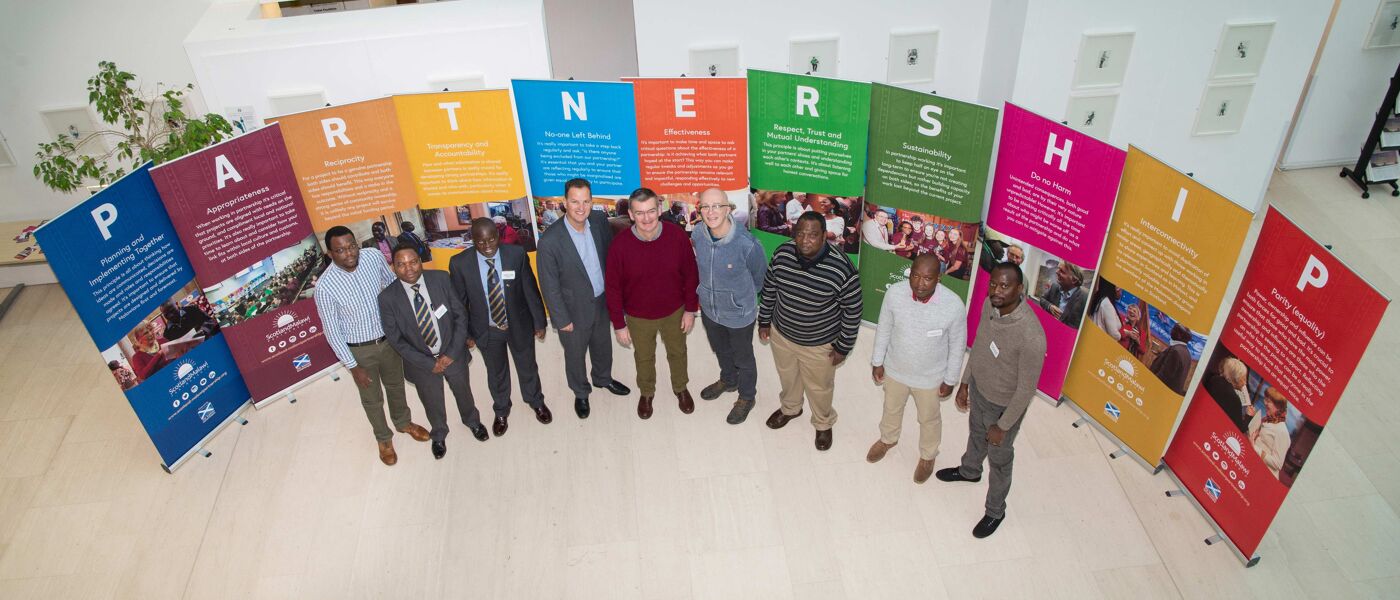
GCID’s approach to international partnerships is one of equity in which both partners have a mutual respect for each other and where activities should be in the agreed interests of both institutions.

We are also keen to support capacity building of both early career and established staff at the African partner institution as a key guiding principle in the design of collaborative research and other programmes, and we look to our partners to be proactive in identifying those academic areas they feel would benefit from partnership activities, with Glasgow playing a facilitating role.

We are delighted to have signed Partnership Agreements with:

  • Makerere University, Uganda
  • University of Dar es Salaam, Tanzania
  • University of Dodoma, Tanzania
  • University of Botswana

The priorities of these partnerships are in developing collaborative research programmes that have clear development relevance to the partner country, promoting the academic development of early-career staff and encouraging student exchanges at both undergraduate and postgraduate levels.

PASCAL

The PASCAL Observatory is an international research and policy development alliance which aims to develop, communicate and explain new and emerging ideas in the areas of place management, social capital and learning regions. PASCAL has representation or operates in more than 50 countries worldwide including Botswana, Lesotho, Malawi and South Africa. It was founded to enable governments at all levels and associated policy-makers to benefit fully from emerging research and learning about how best to foster balanced and sustainable economic and social development in their regions. The central purpose is to enable the effective delivery of policies that improve the quality of living and working circumstances at local and regional levels, recognising the importance of learning, social capital and the necessity of partnership for the successful implementation of policy.

Centre for Research and Development in Adult and Lifelong Learning (CRADALL)

CRADALL's overall aims are to conduct inter-disciplinary and multi-disciplinary research and development activities in adult education and lifelong learning for social justice, social inclusion and poverty reduction. Working independently and in partnership with other organisations including those in Scotland, CRADALL has a particular geographical interest in developing countries - for example, Botswana, Malawi, Kenya, Pakistan as well as a number of European countries.